Drought Lawn Care Tips
Southeast Drought 2026: What It Means for Your Lawn in Georgia, Tennessee & South Carolina
If your lawn is looking stressed, thin, or brown right now, the drought is likely the reason — and you are in very good company across the Southeast.
The region is experiencing its most widespread drought since at least 2000. Georgia, North Carolina, and South Carolina all posted their driest September-through-March periods on record going back to 1895. In Georgia, drought conditions cover approximately 88% of the state. Tennessee and South Carolina are in similar shape, with forecasters projecting near-normal to below-normal precipitation and above-normal temperatures through at least late July. Most of the Southeast has run 8 to 16 inches below normal precipitation over the past nine months.
For homeowners across metro Atlanta, Nashville, Greenville, the Augusta area, and surrounding communities, this drought is affecting lawns differently depending on your grass type.
Here is what is happening and what you should do about it.
Fescue Lawns: Dormancy, Not Death
If you have tall fescue — common in northern Georgia, the Atlanta metro, middle Tennessee, and the upstate South Carolina area — it is likely going dormant right now. Fescue is a cool-season grass that shuts down top growth during heat and drought as a survival mechanism. The crown of the plant, the tissue at the base that drives all future regrowth, can stay viable as long as it remains hydrated.
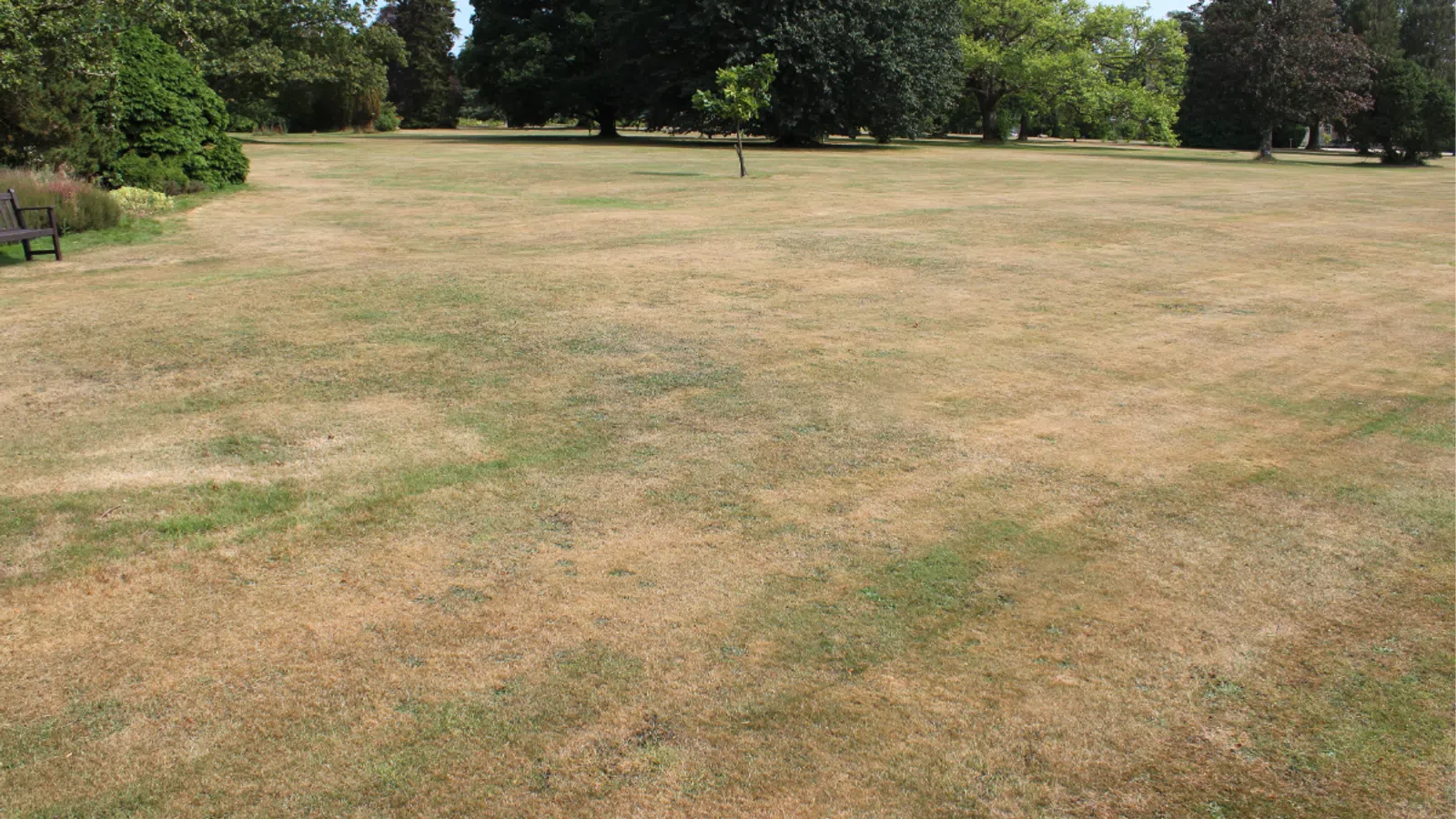
Browning fescue is not a dead lawn. A properly maintained fescue lawn can survive approximately two months without significant rainfall. The priority right now is crown protection, and the recovery plan is built around fall.
Warm-Season Lawns: Bermuda, Zoysia, Centipede, and St. Augustine
If you have a warm-season grass — Bermuda, Zoysia, Centipede, or St. Augustine — summer is normally your lawn's strongest season. Under a drought this severe, even warm-season grasses are showing stress. Bermuda and Zoysia are highly drought-tolerant and can handle extended dry periods without permanent damage, but they need some moisture to maintain color and density. Centipede and St. Augustine are more sensitive and can suffer real crown damage if drought stress goes unmanaged.
Signs to watch for: rapid browning even in normally resilient areas, patches that don't respond to watering, and thinning in high-traffic zones. If you see irregular patches or ring-shaped discoloration, contact us — fungal disease risk is elevated during heat and humidity cycles.
What You Can Do Right Now
Check your local water authority before running irrigation. Many communities across Georgia, Tennessee, and South Carolina have voluntary or mandatory outdoor water restrictions in place. Following those rules is the right call — your lawn can survive the drought dormant, and a strong fall plan brings it back.
If outdoor watering is permitted:
- Water deeply and infrequently — about one inch per week — rather than light daily sprinkles.
- Water in the early morning to reduce evaporation.
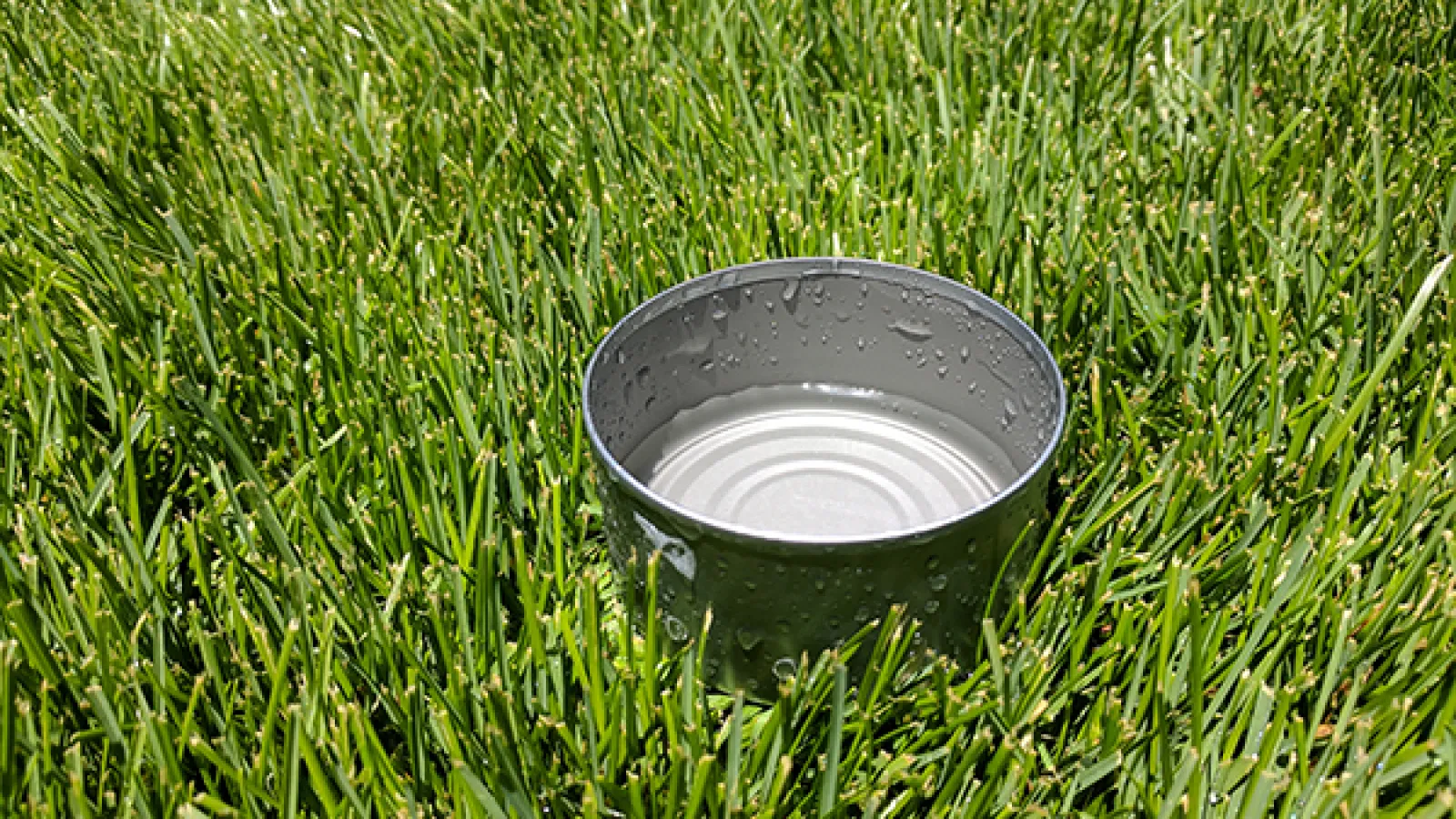
- Use the tuna-can test: set a can on the lawn while running your zones, and time how long it takes to collect one inch.
- Raise your mowing height to 3.5-4 inches. Taller blades shade the soil and hold moisture.
- Reduce mowing frequency and never remove more than one-third of the blade at once.
- Limit foot traffic on stressed turf.
Keep Your Lawn Service Going
It is a common instinct to pause lawn treatments when the grass looks bad. But staying on program through the drought is one of the most important things you can do. Slow-release nitrogen keeps the turf's root system supported without pushing vulnerable top growth. Herbicide applications during this window target summer annual weeds that are actively filling in thinned areas. Lawns that stay on program through a drought consistently bounce back faster and with better density than those that go unmanaged.
Turf Masters technicians are actively monitoring conditions across every property and adjusting their approach based on field conditions. We are also reinforcing watering and mowing guidance on every visit.
The Recovery Plan
For fescue customers in northern Georgia, the Atlanta area, and middle Tennessee, fall aeration and overseeding is the most impactful step you can take. Core aeration breaks through compacted, heat-baked soil and opens it up for water, air, and new seed. Overseeding rebuilds the density and coverage that drought has stripped out. The window in our region typically runs from late August through October, when soil temperatures cool and germination conditions improve.
For warm-season lawns, the recovery is built into the grass itself. Bermuda and Zoysia are resilient — as moisture returns and temperatures moderate in fall, they will fill back in. What matters now is protecting root health and not adding stress by pushing aggressive growth during the drought.
We'll reach out to customers when fall scheduling opens. If you have questions about your lawn's condition or whether your property needs any additional support this summer, contact your local Turf Masters team. We're watching conditions closely and here to help.